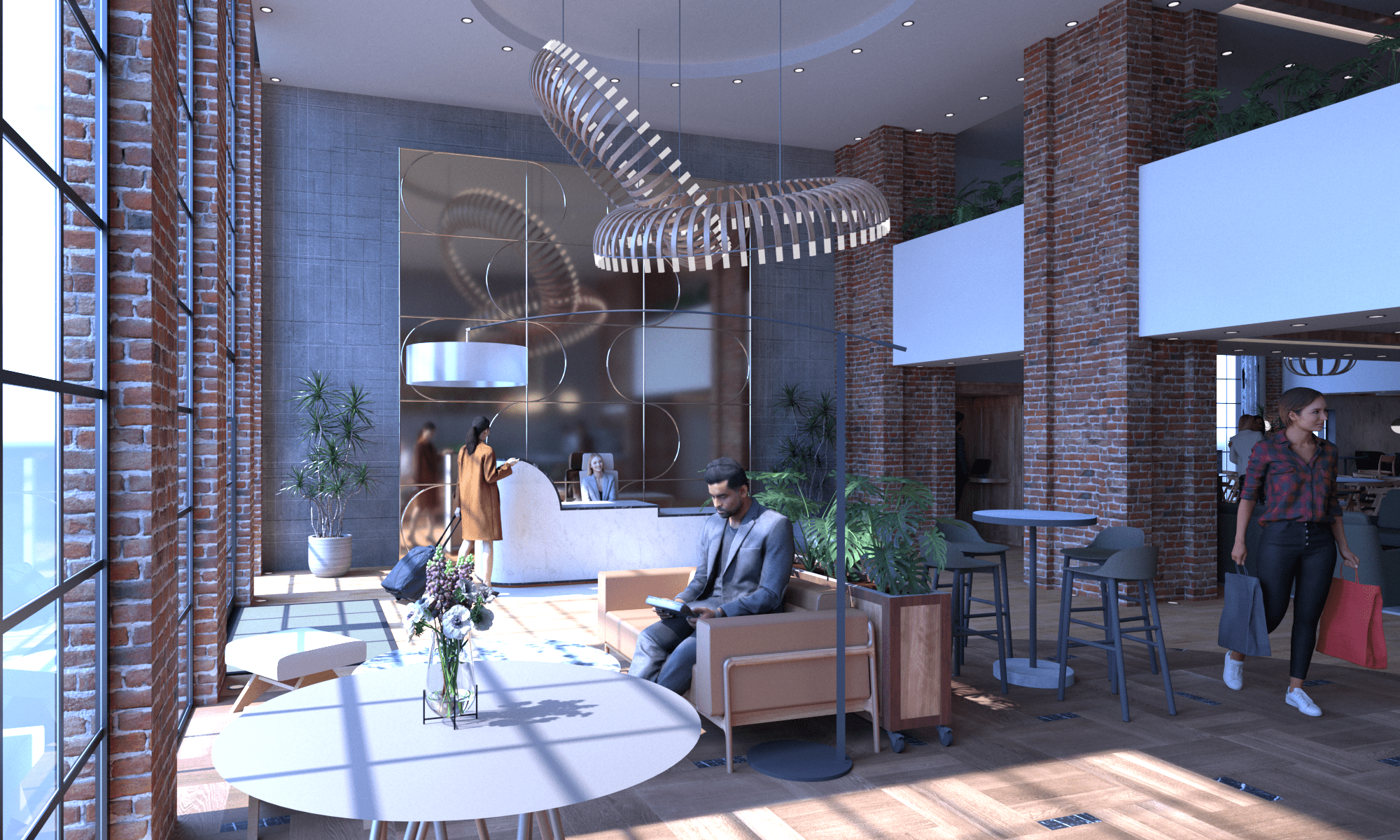
The final project for my Higher National Diploma in Interior Design with the Dublin School of Design.
The design proposal “to design the interiors of a boutique hotel in Dublin’s city centre” was initially a massive struggle to get stuck in to. It felt inappropriate to design yet another hotel in a city being leeched of its cultural institutions and venues, in a year where hotel travel has been reserved for the unashamed Covid denying wealthy who are willing to put the lives of their minimum wage servers on the line. Not to mention the ever-growing number of homeless families in emergency accommodation and rough sleepers that cannot afford a roof over their heads due to crippling rent prices brought on by a huge supply and demand problem of affordable housing to buy for young professionals, such as myself.
In fact, it was all these thoughts that directed me to stop treating this space as a hotel and rather treat it as a multifunctional venue. It was far easier to get excited about designing a bar, restaurant, lounge and coffee shop that served not only the guests, but the people of the city. It was imperative that the space feel part of the culture of Dublin while also did not end up recreating the classic Dublin spaces we love.
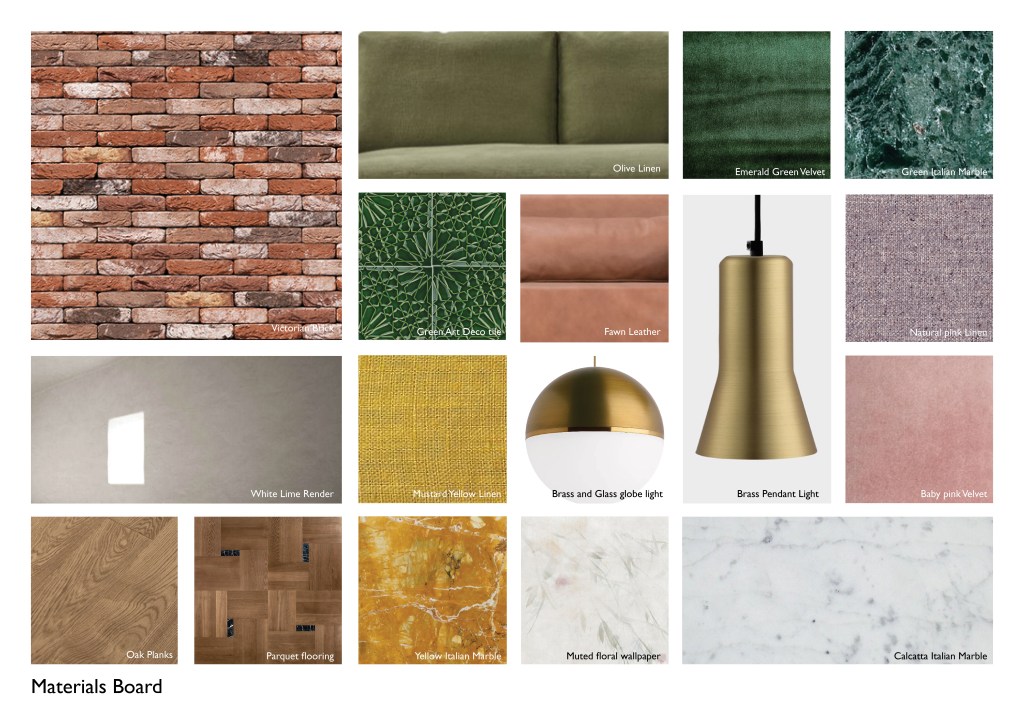
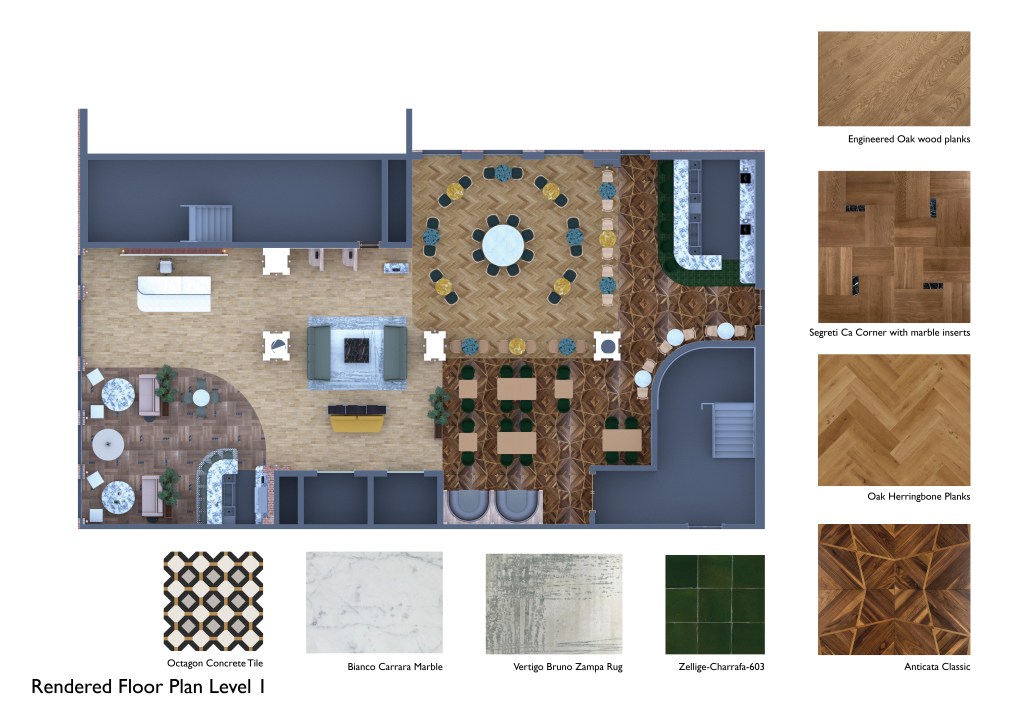
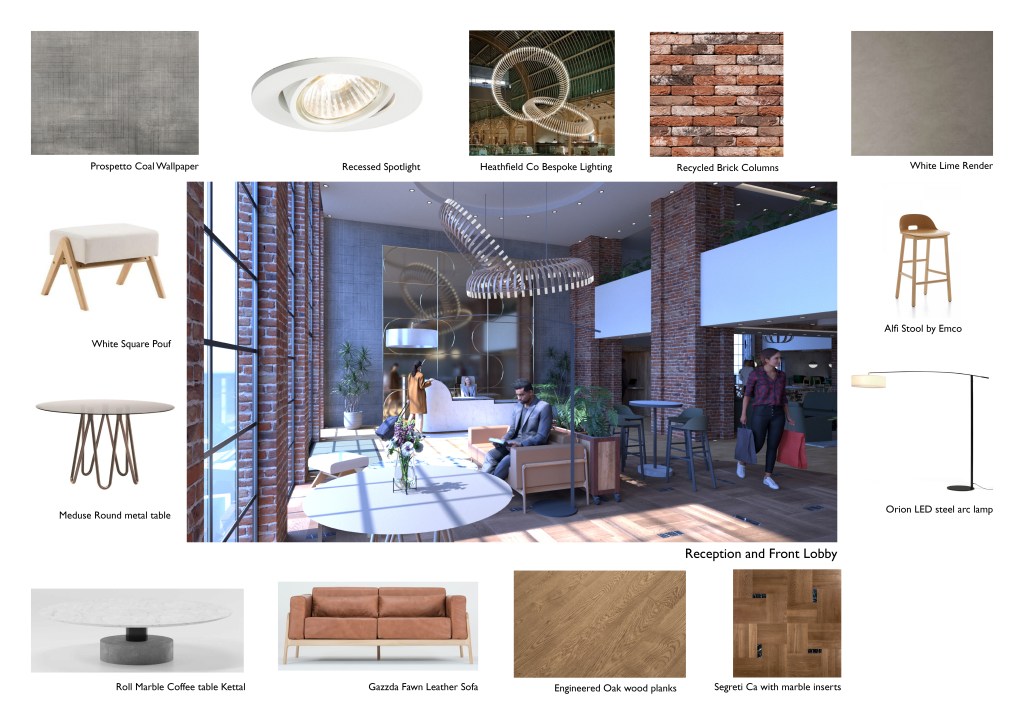
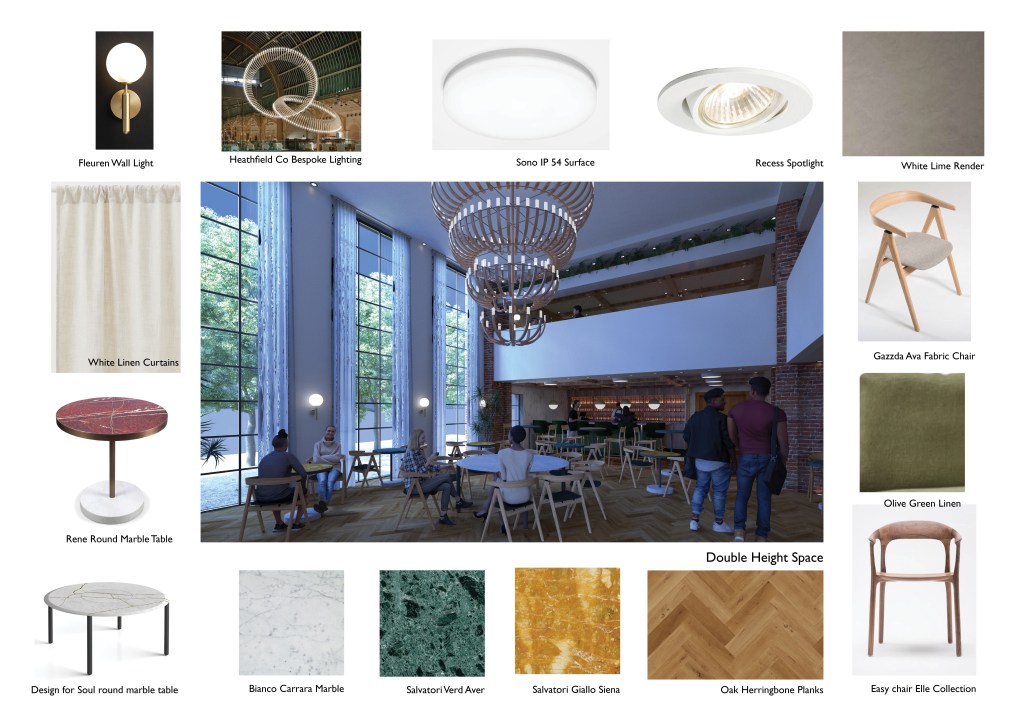
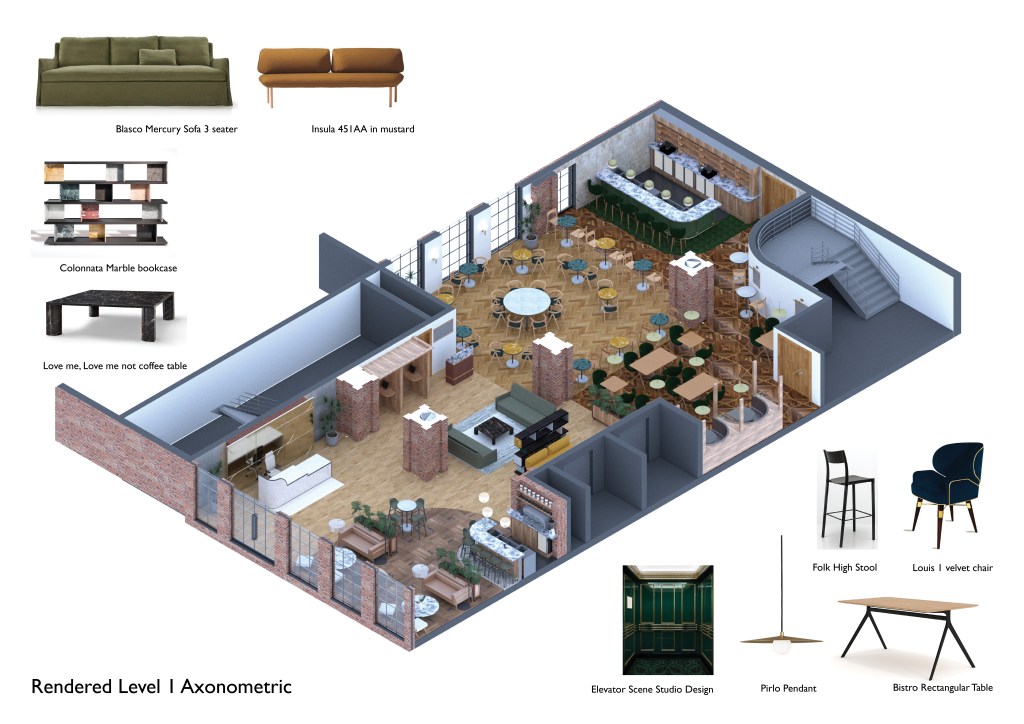
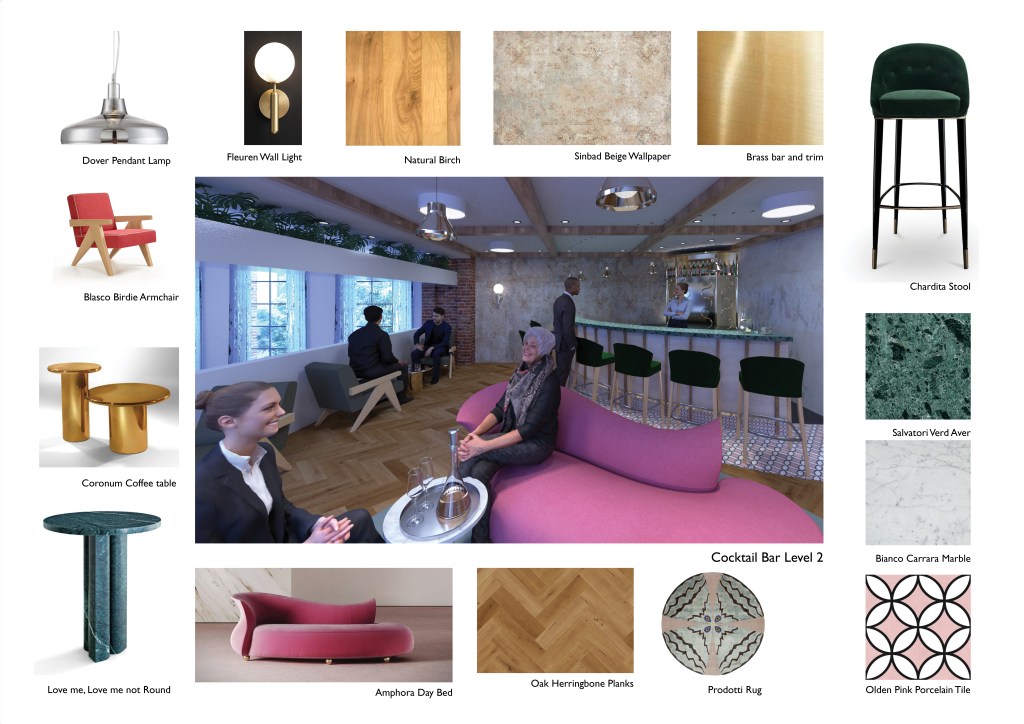
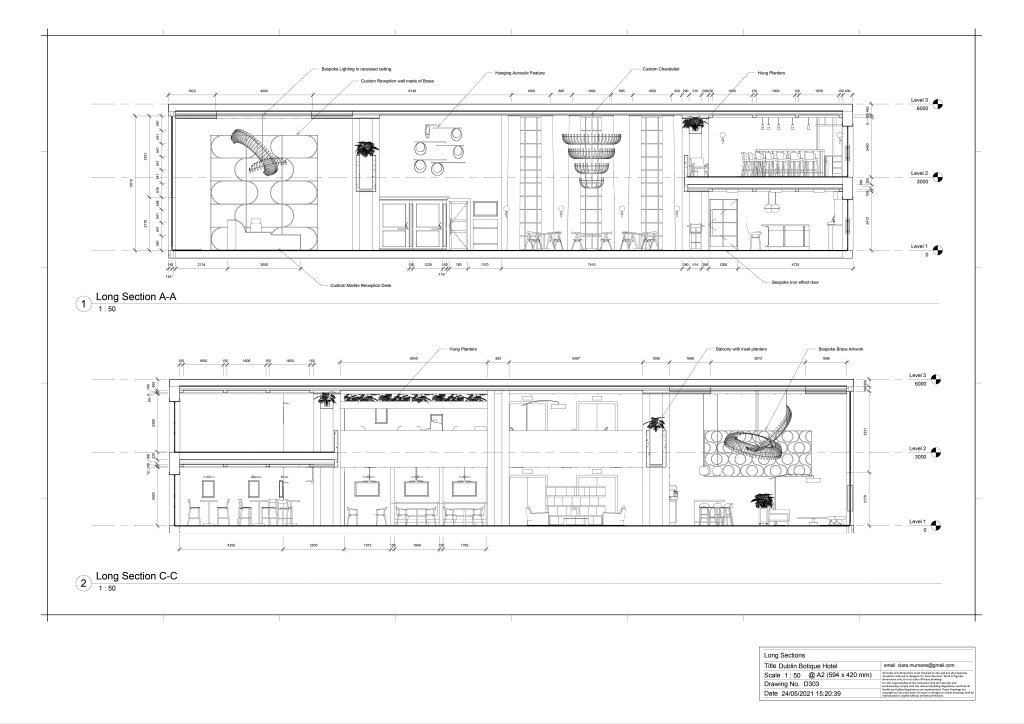
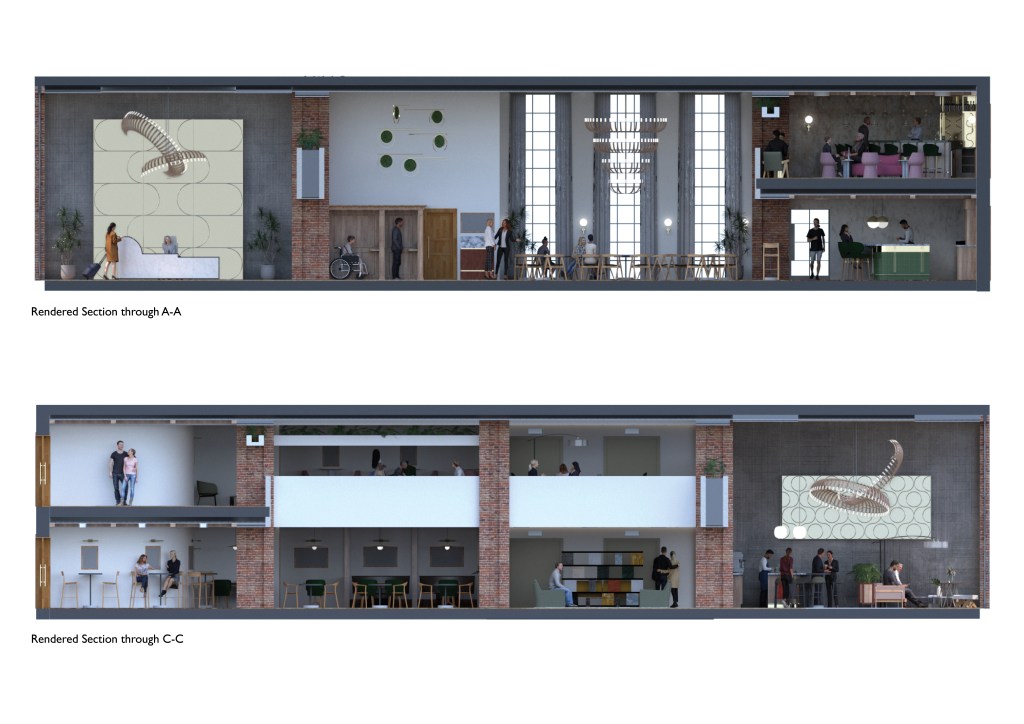
The initial materials pallet was drawn from Dublin’s industrial past. There is a huge amount of recycled brick available from the Victorian era which has been use on the Façade and the central columns which define the spaces. The windows are custom made to evoke the sense of a Victorian factory while the scaling of the windowpanes remind us of how far building technology has come. Wooden floors have been chosen not just for their durability and warmth but also for the all-important sound. The straight oak engineered planks direct you into the building while the parquets set up an arrangement of furniture and space to stay. The herringbone defines the double height space which is set up as the restaurant but can be cleared to form a dancefloor for events. The new ceramic tiles and the structure of the bespoke bars are a nod to a Victorian style, but their colours and finishing is entirely more modern.
Indeed, the styling is heavily influenced by West Coast American hotels where guests often stroll in from the heat in designer flip flops. If the hotel was to become somewhere people felt welcome into regardless of whether they were staying or not it had to lose the stuffiness often associated with a Irish five star. This influenced the light to medium toned wood, the abundance of very moveable furniture and the generous sofas and armchairs in the lounge areas.
 Ciara Murnane Design